The 20 worlds
One Peg has 1,000 levels, grouped into 20 worlds of 50. Every level asks the same thing: put one peg on the board so the marble lands in the gold star cup. What changes from world to world is the board itself. Each of the first nine worlds brings in one new piece, and the worlds after them mix the pieces you already know.
Each world paints the board frame and the posts between the cups in its own colour, so you can always tell where you are. Levels 1 to 3 are plain boards for learning the basics, and the first new piece arrives at level 4.
Three stars hang on every level, along the route of an answer. The marble collects any star it passes through, and a win pays the stars it collected. Every win is worth at least one star, so a level won the long way round still counts, and catching all three is a puzzle of its own.
1. Spring Hill: springs
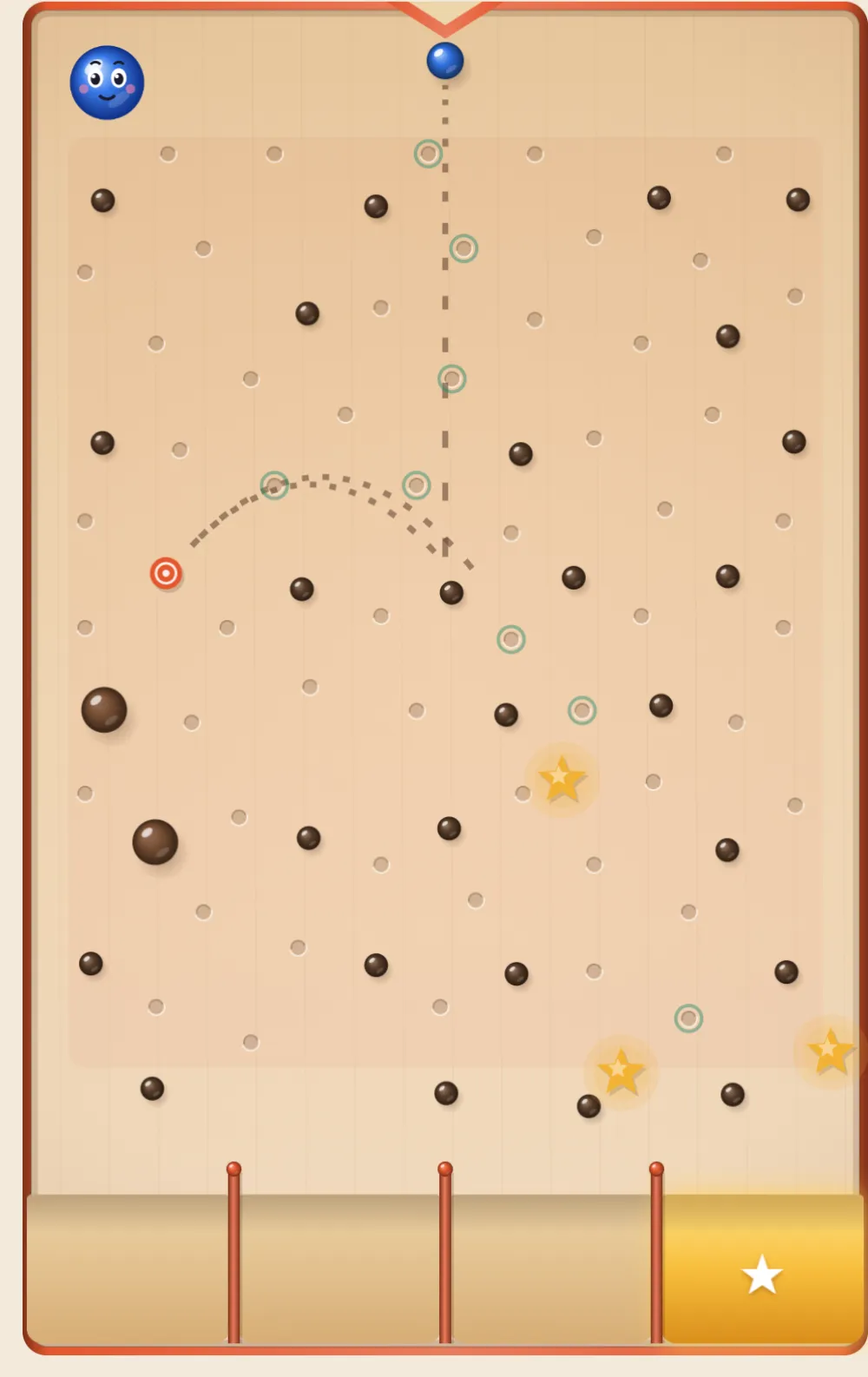
A spring is the small red ring on the board. When the marble touches it, the marble leaves much faster than it arrived, and that speed carries it a long way across the board. A spring can reach a cup that an ordinary bounce never could.
The trick is that a small change makes a big difference. Where the marble meets the spring decides which way it is thrown, so if a spring sends the marble the wrong way, try the holes next to the one you used before you look elsewhere.
2. Glass House: glass
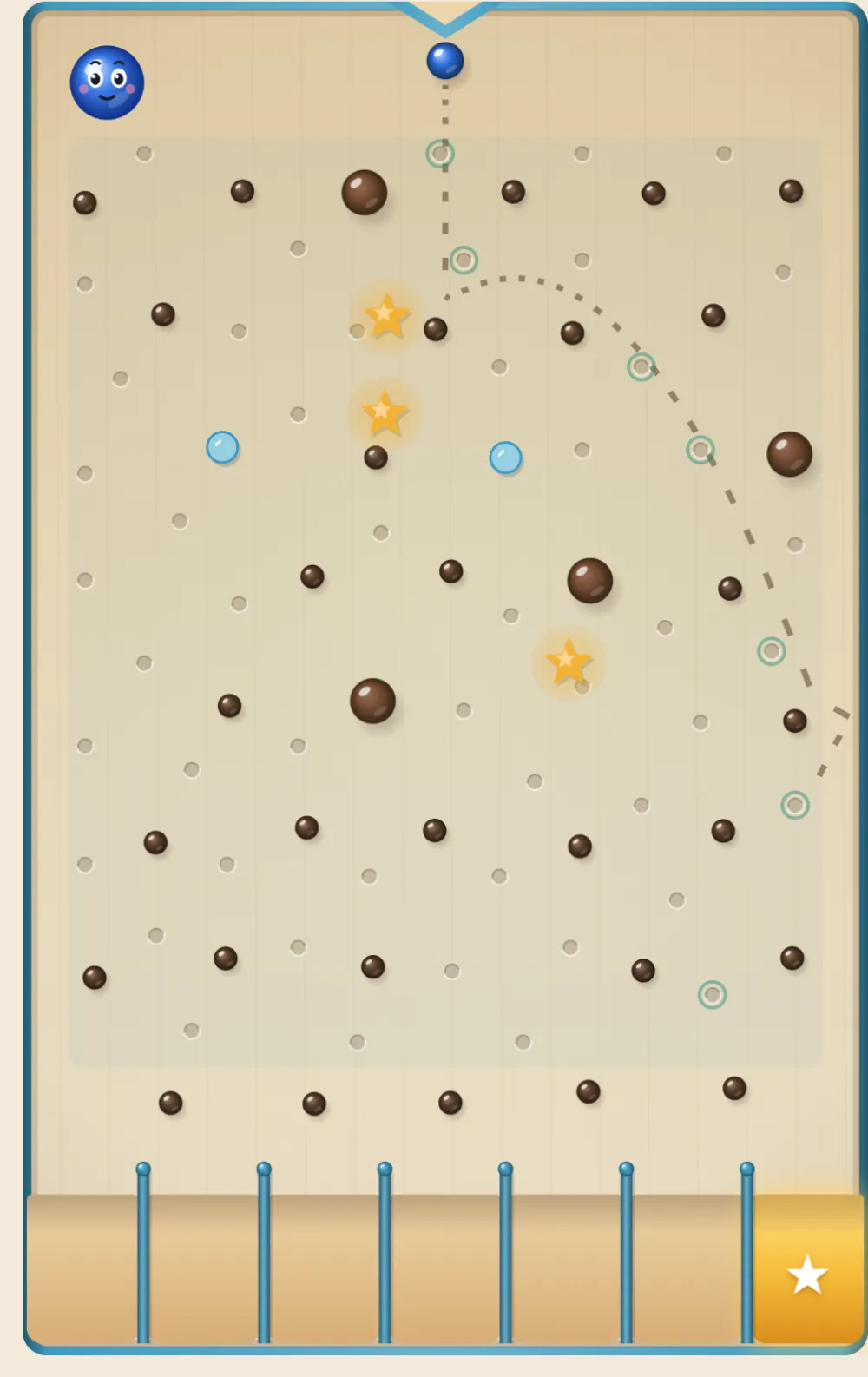
Glass pegs are the pale blue ones. A glass peg bounces the marble once like any other peg, then shatters. Anything that would have hit it later passes straight through the space where it stood.
So a glass peg can only help once in a drop. If your route needs the marble to come back past the same spot, the glass will already be gone, and the marble will fall through where it was.
3. Portal Peaks: portals
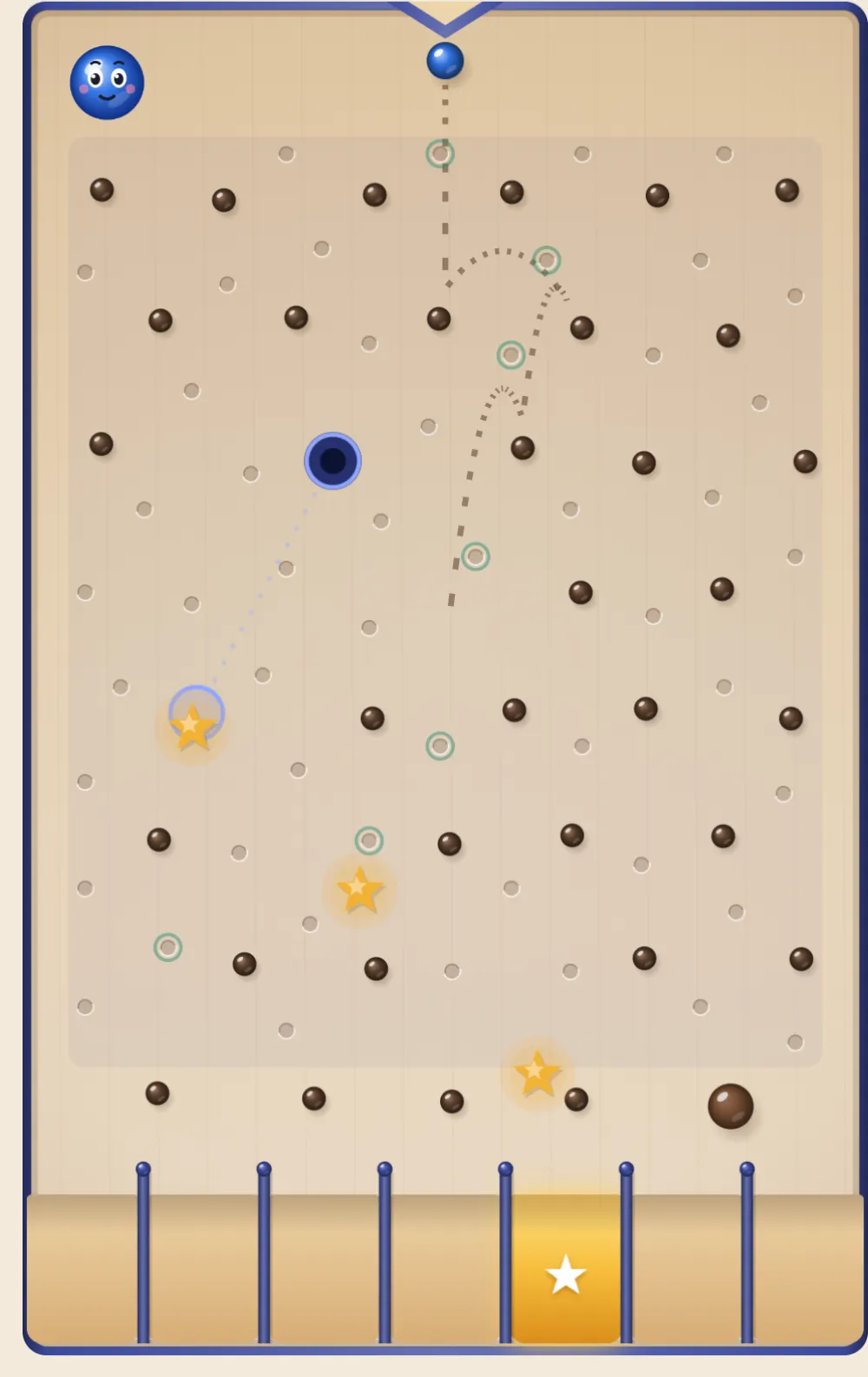
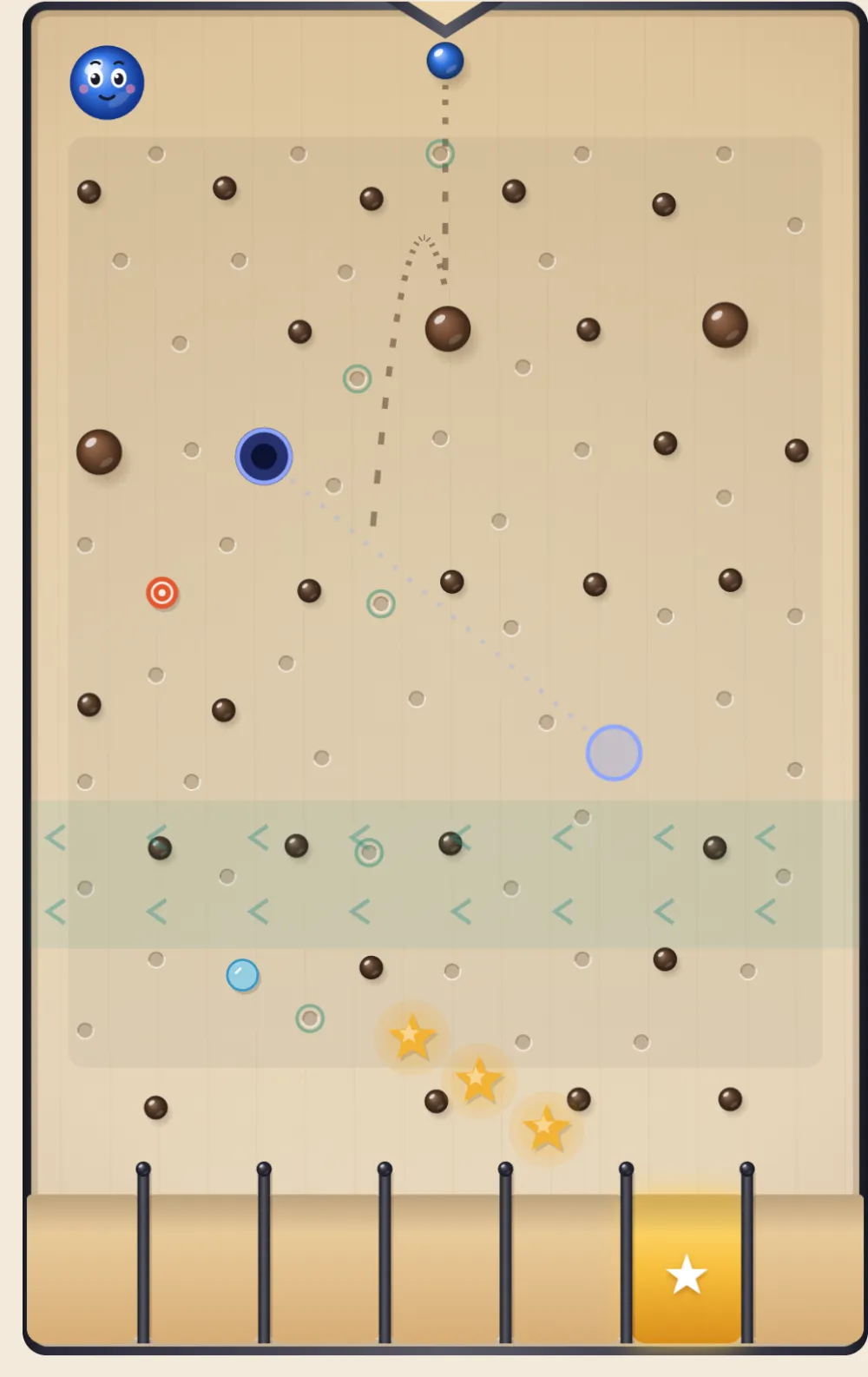
Portals come in pairs. The marble goes into the dark ring and comes out of the light one, moving just as fast as it went in. A faint line joins the two so you can see which rings belong together.
Read a portal as a shortcut across the board. If the cup you need is on the far side, a peg that steers the marble into the dark ring can be the whole answer.
4. Pebble Creek: pebbles
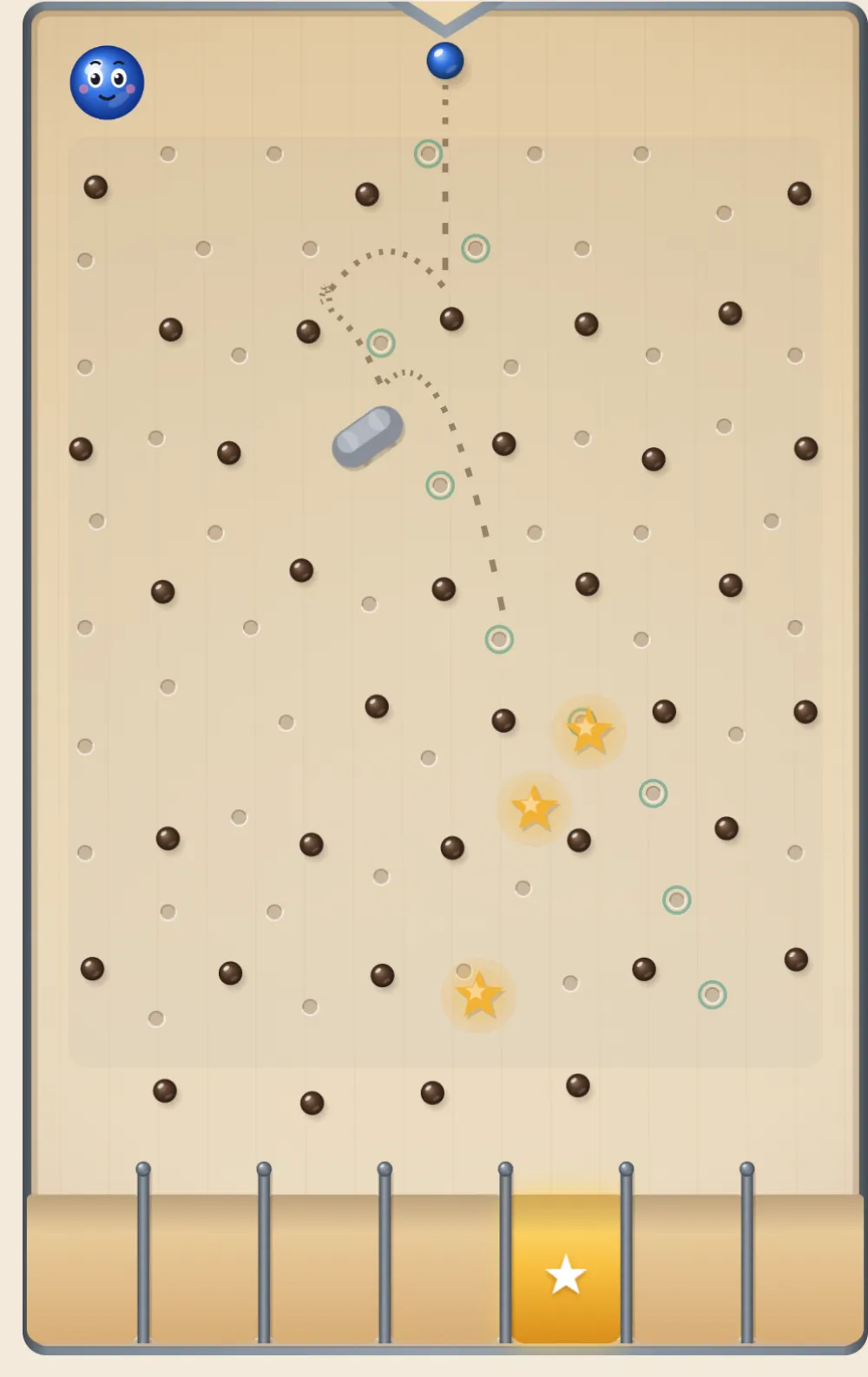
Pebbles are the big grey stones set at an angle. Because they are long and tilted, they throw the marble sideways rather than straight back, and the way the stone leans decides which side.
Use a pebble to move the marble across the board in one go. A peg above it changes where the marble meets the stone, and two spots on the same stone can send it to very different cups.
5. Plank Bridge: planks
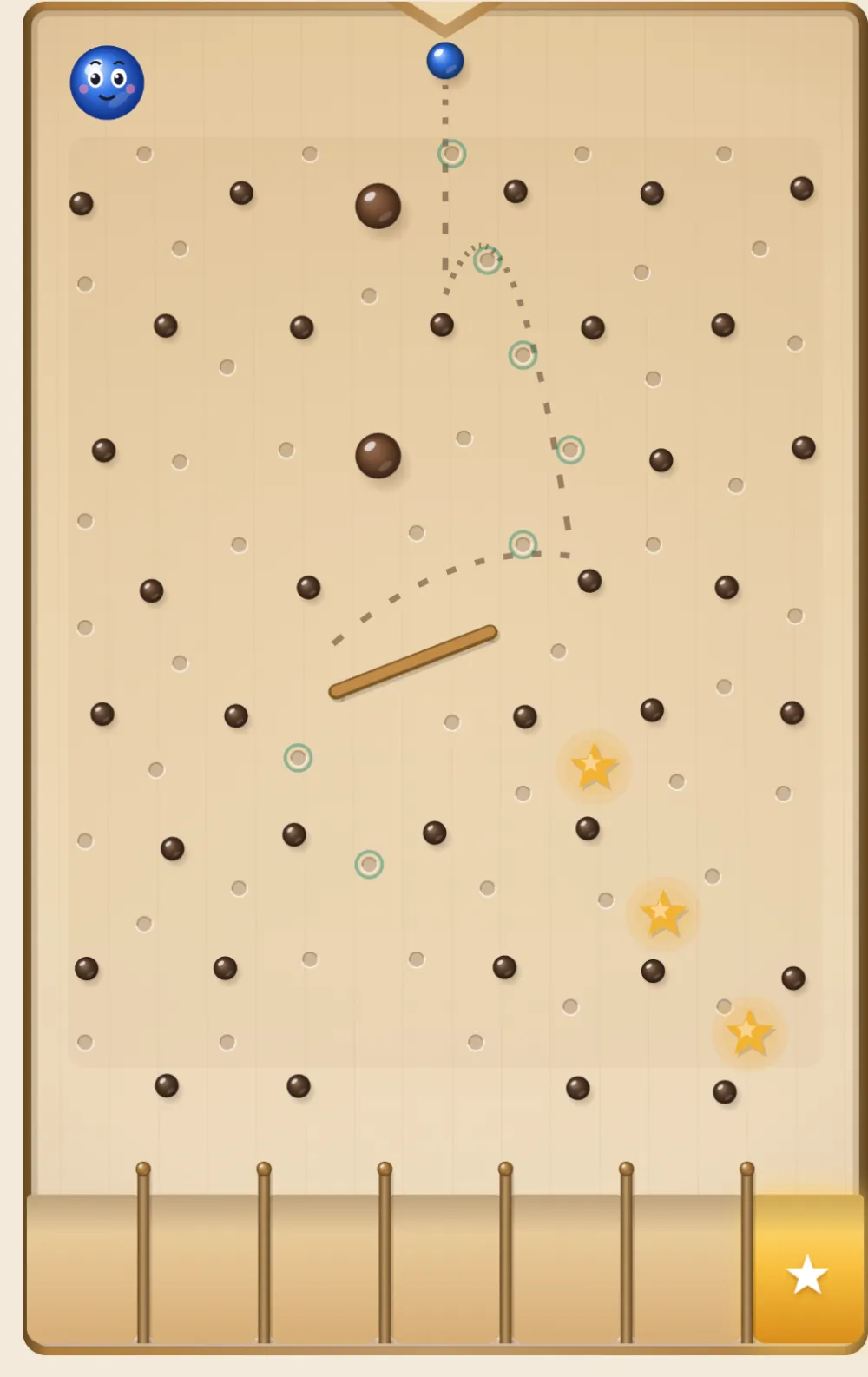
A plank is a long brown bar on a slope. When the marble lands on it, it rolls along the plank and drops off the low end, wherever it first touched.
That makes a plank one of the most predictable pieces in the game. If you can get the marble onto the plank at all, you know where it will leave it, so the question becomes what lies below the low end.
6. Moving Market: movers
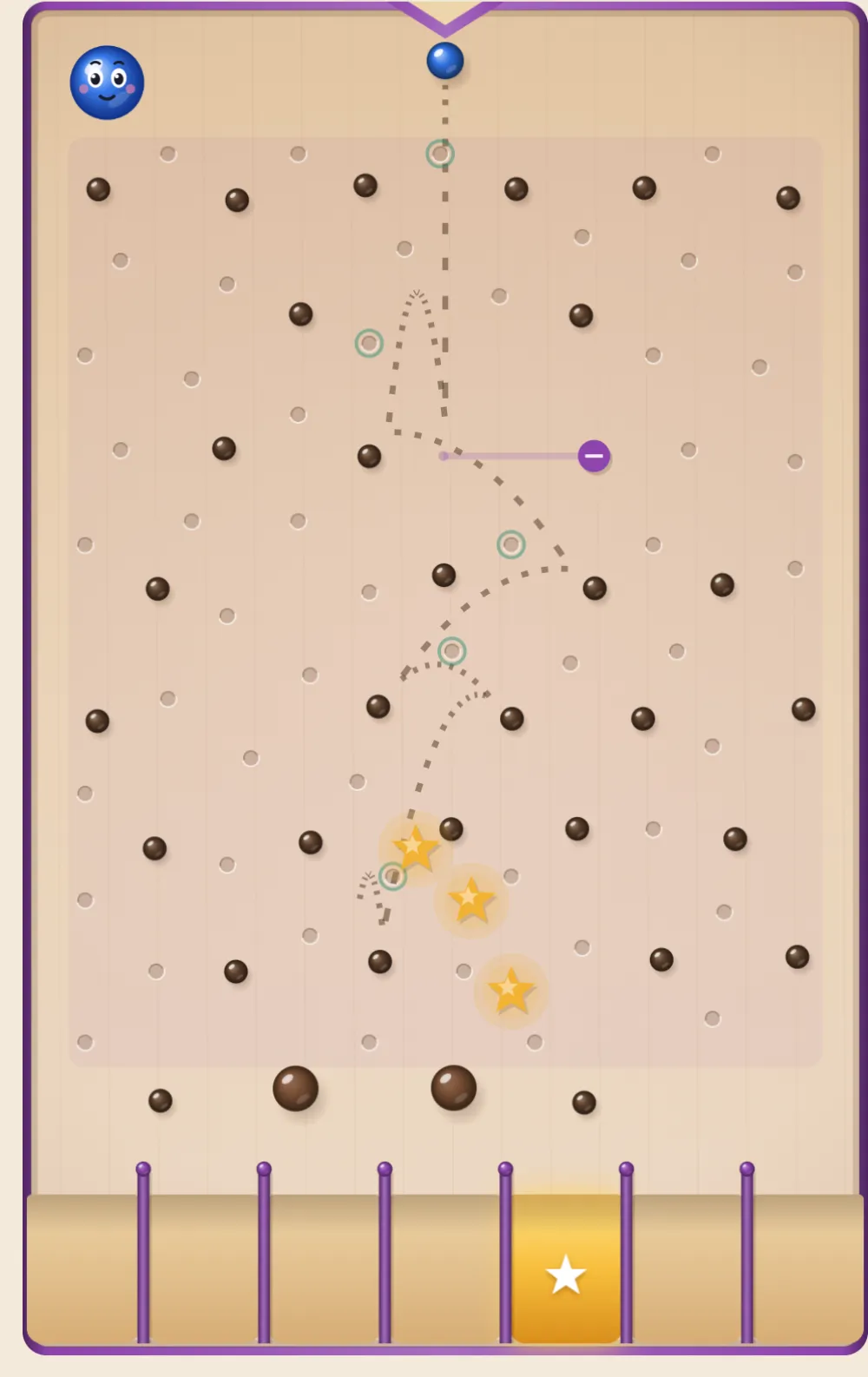
Movers are purple pegs on a short track. They sit still while you aim, then slide from side to side once the marble drops.
So the question is not where the mover is now but where it will be when the marble reaches it. Every drop is the same, so a mover always arrives at the same spot for the same peg, and you can learn it from one try.
7. Mud Flats: mud
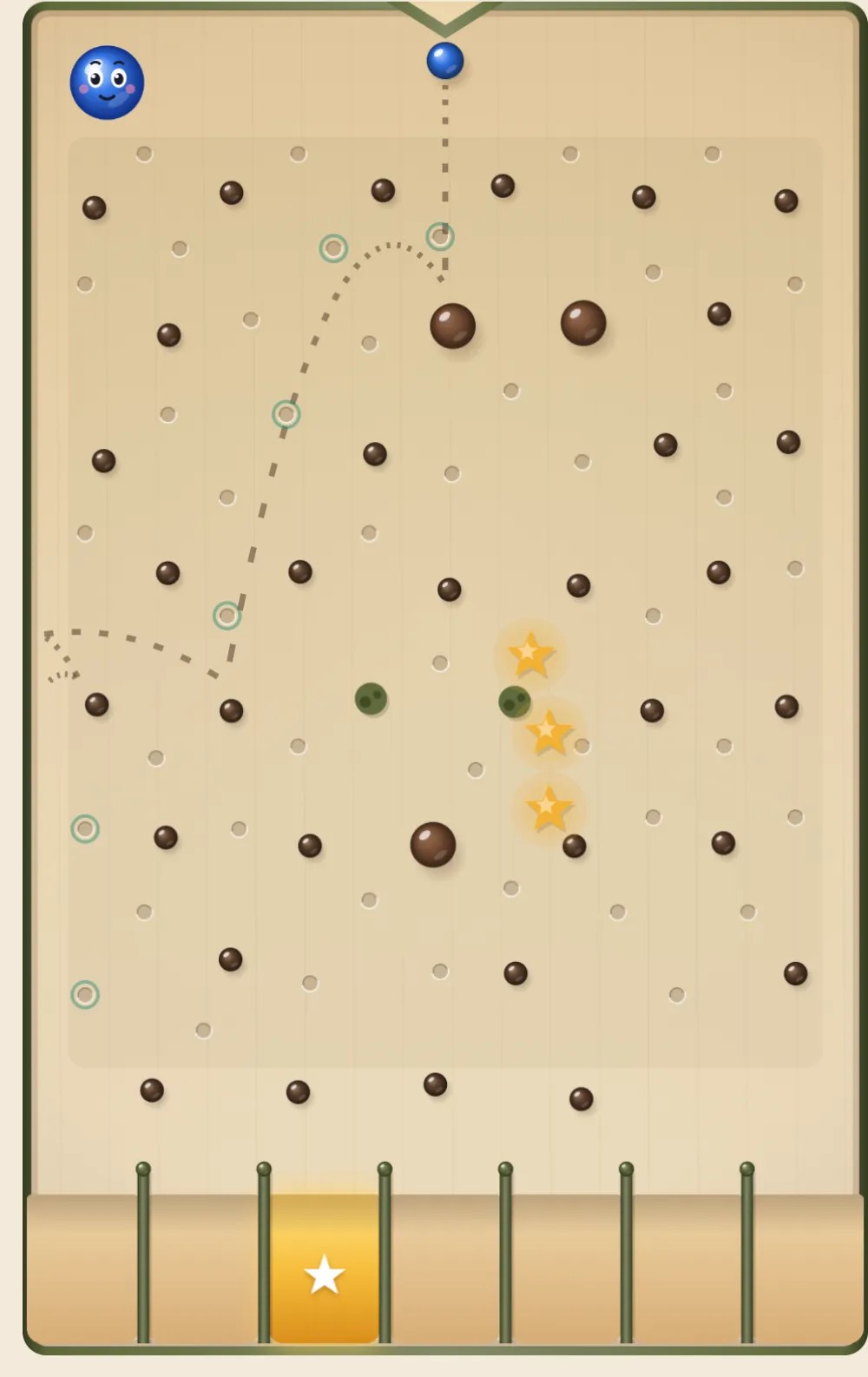
Mud is the dark green patch. The marble sinks into it, loses nearly all its sideways speed, and drops almost straight down.
Mud is a brake. When the marble keeps flying past the cup you want, look for a patch of mud above that cup and steer the marble into it.
8. Windy Ridge: wind
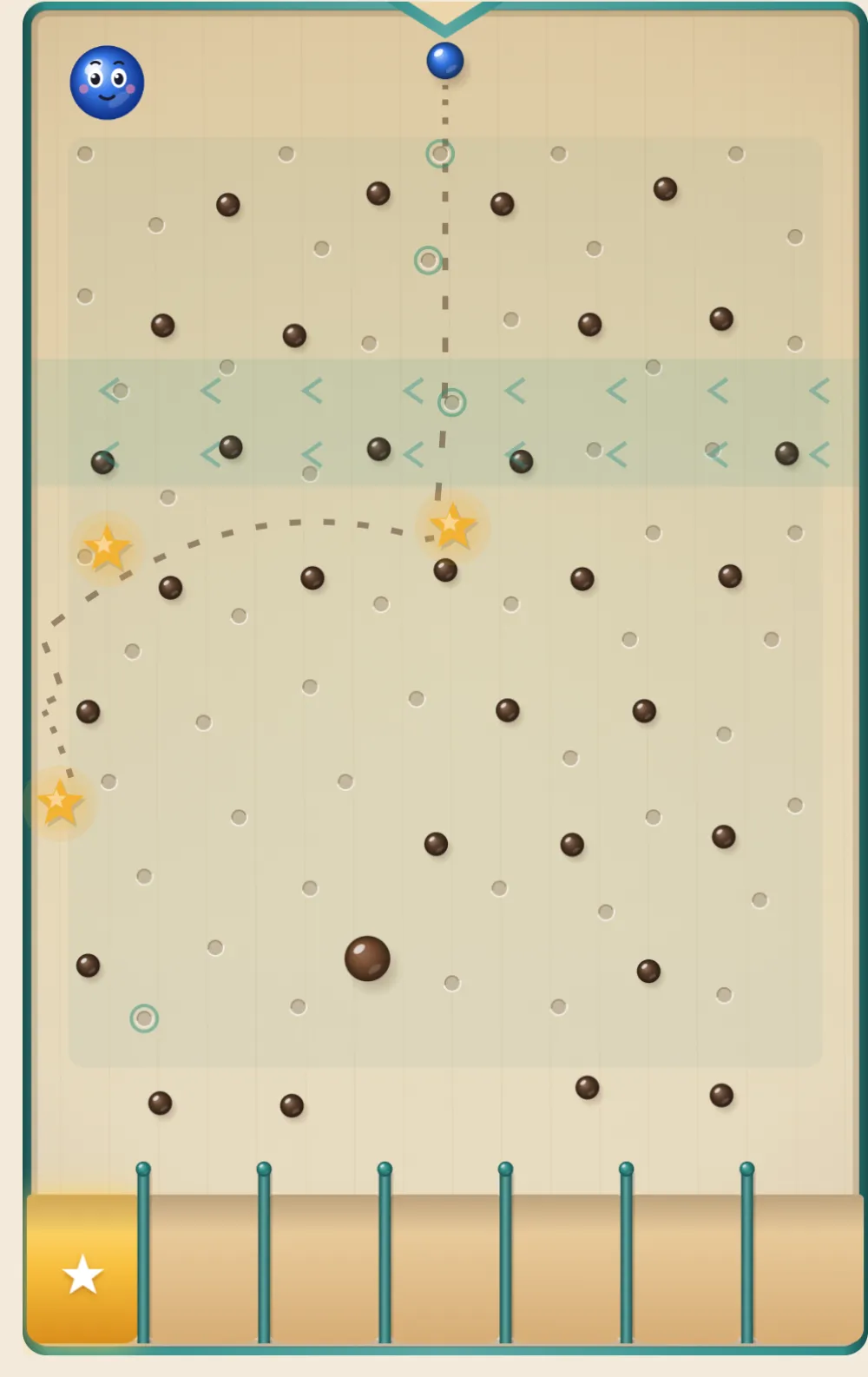
Wind blows across a pale band marked with arrows. While the marble is inside the band, it is pushed the way the arrows point, and it carries that push on after it leaves.
The longer the marble stays in the band, the further it is pushed. A marble that crosses the band quickly is moved a little, and one that bounces around inside it can be carried right across the board.
9. Gem Mine: gems
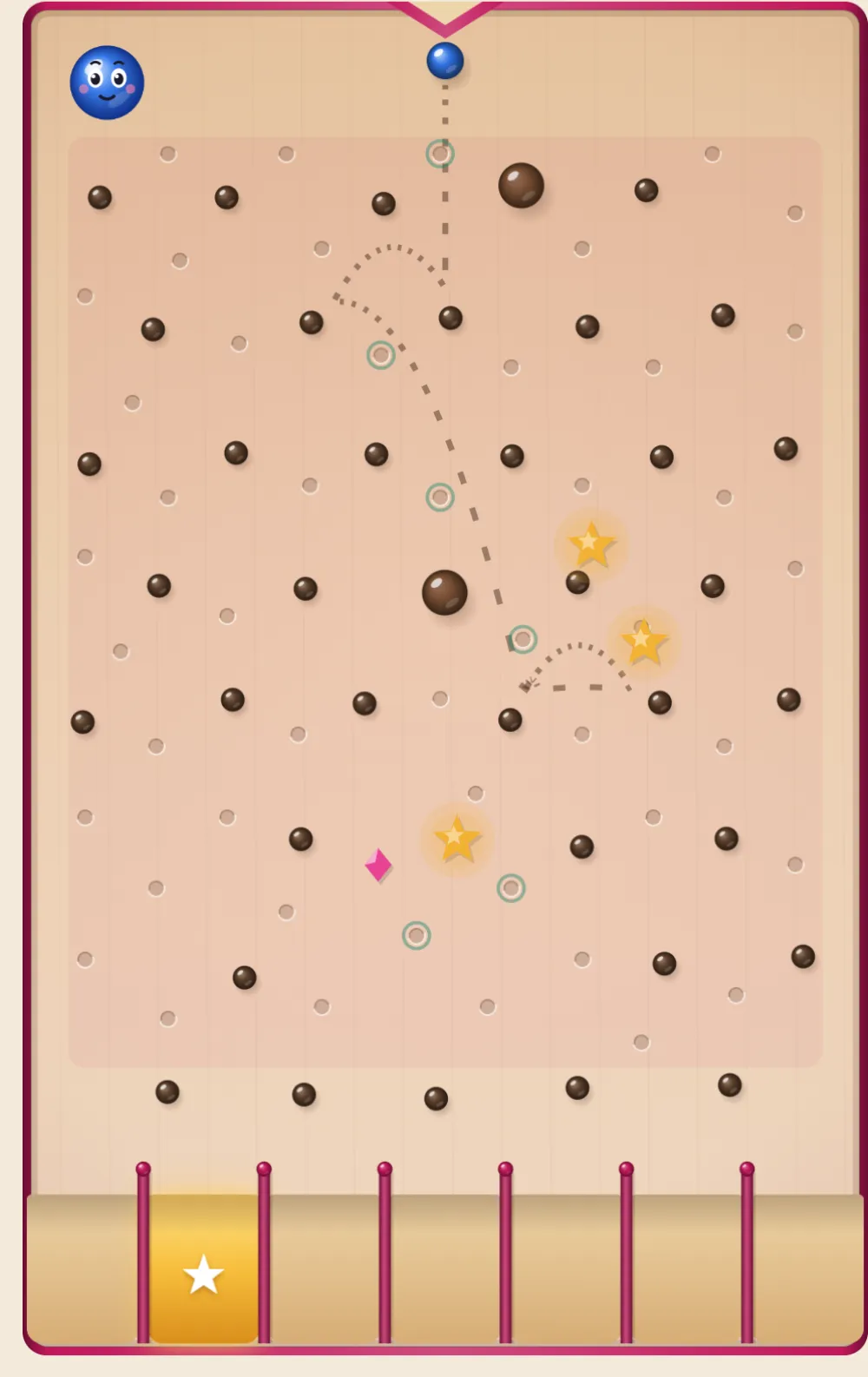
Gems change what winning means. The marble has to pass through every gem on the board on its way down, then land in the star cup. A drop that reaches the cup and misses a gem does not count.
Work backwards from the gem. Find a route that passes through it and still has a way down to the cup, then find the peg that puts the marble on that route.
Worlds 10 to 18: the mixes
From world 10 nothing new arrives. Each world takes two or three pieces you already know and puts them on the same board, where they start to work together: a pebble that throws the marble onto a spring, or a plank that rolls it into the path of a mover.
- Stone Springs (levels 451 to 500): pebbles and springs.
- Hall of Mirrors (501 to 550): glass and portals.
- Stormy Marsh (551 to 600): mud and wind.
- The Sawmill (601 to 650): planks and movers.
- Pinball Alley (651 to 700): springs, planks and glass.
- Crystal Falls (701 to 750): gems, springs and pebbles.
- Treasure Run (751 to 800): gems, portals and planks.
- Portal Storm (801 to 850): portals, wind and glass.
- Clockwork Bog (851 to 900): movers, mud and gems.
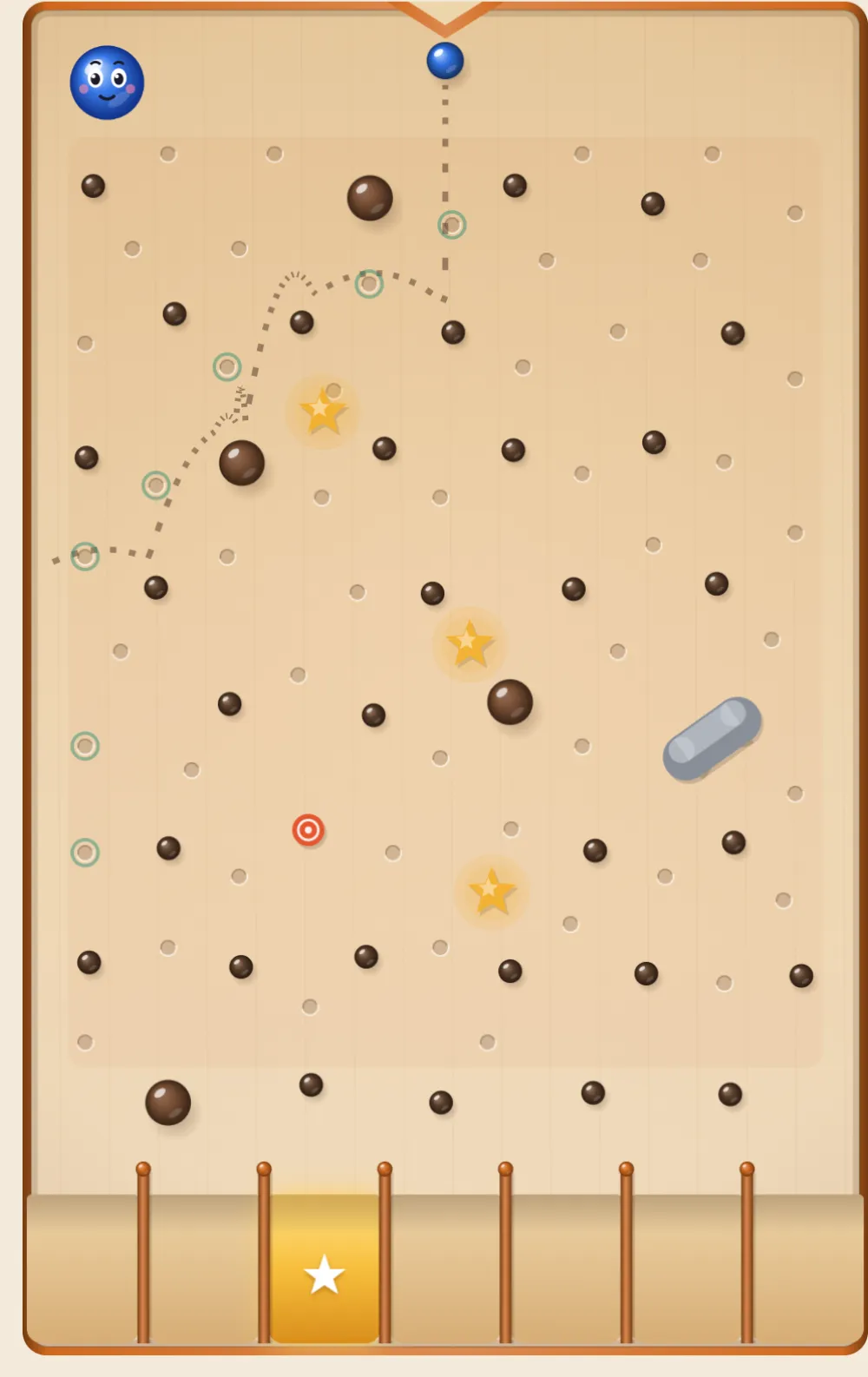
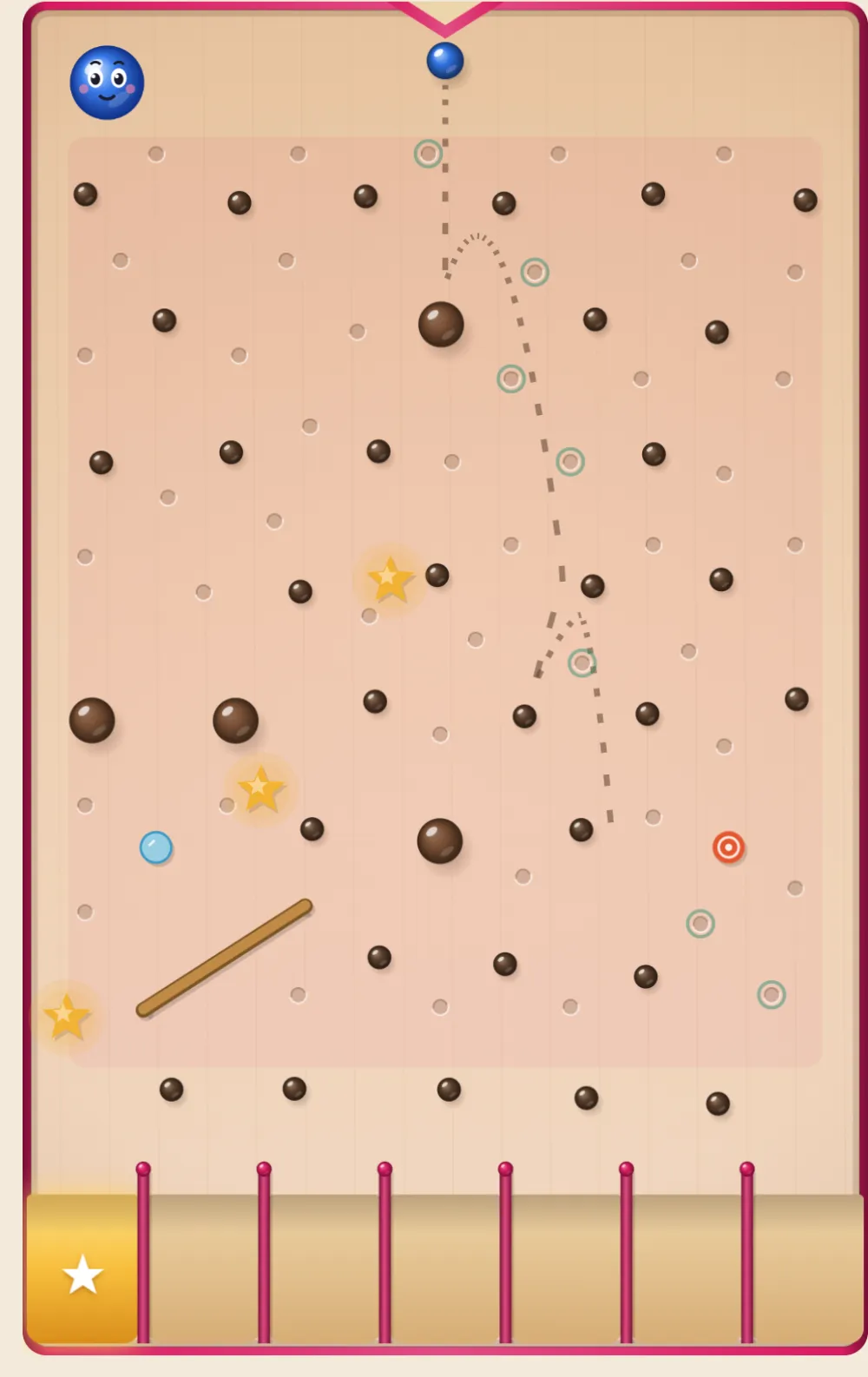
Worlds 19 and 20: Grand Tour and The Summit
The last two worlds draw a different mix for every level: three pieces at a time in Grand Tour (levels 901 to 950) and four in The Summit (951 to 1,000). No two levels in a row look alike, so these worlds test whether you can read a board you have never seen.
After level 1,000
The game keeps going. Endless levels are made fresh on your own device, as hard as The Summit, with a new mix of pieces each time.
Every level in the ladder is checked by the game's own solver before it is used: there is always at least one peg that wins, so a level that seems impossible has an answer waiting.