Tips and strategy
One Peg has no luck in it. The same peg in the same hole sends the marble down the same route every time, on every phone. That means every drop you watch teaches you something you can use on the next one. These are the habits that make the biggest difference.
1. Start with the dotted line
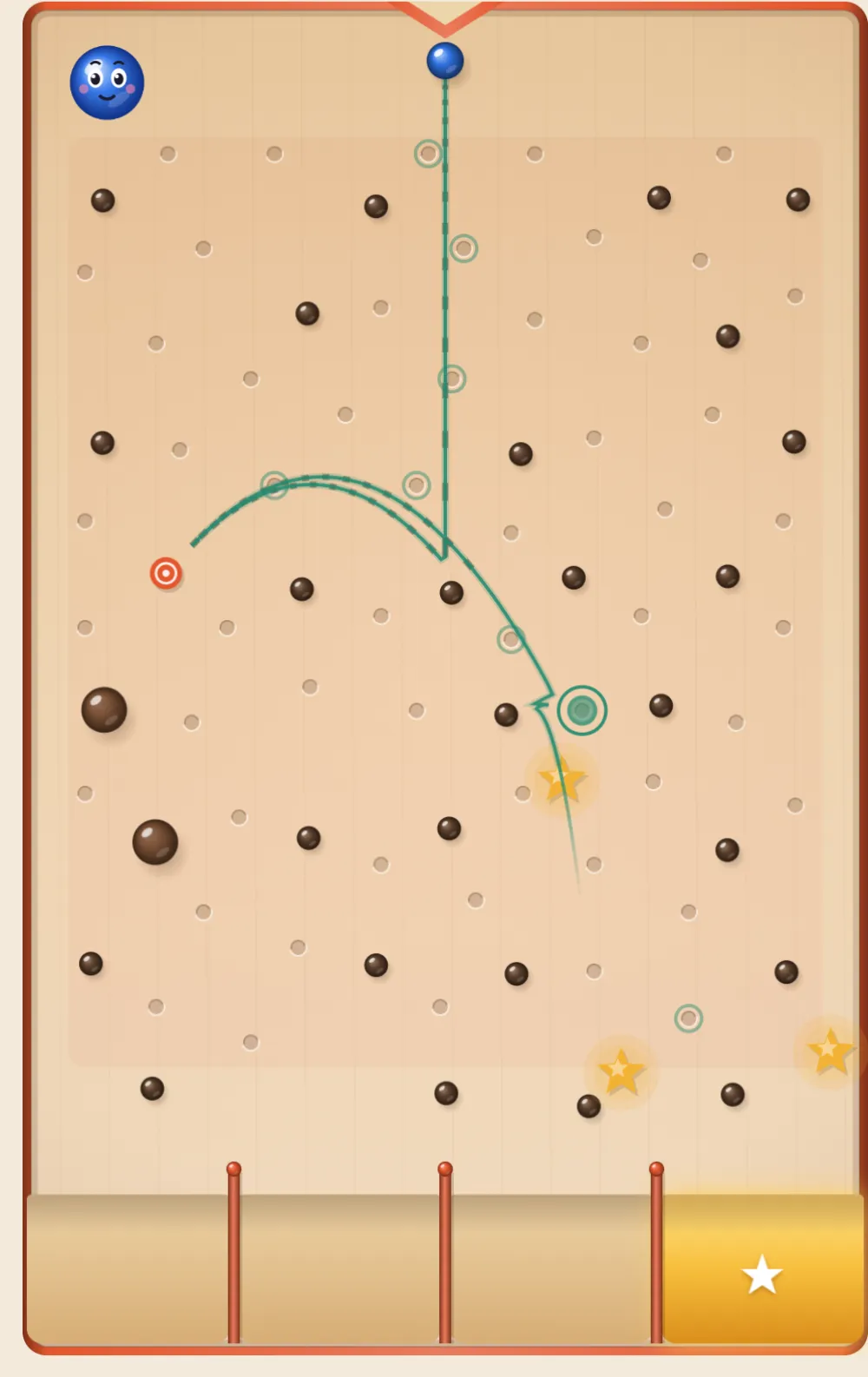
Before you touch the board, look at the dotted line. It shows where the marble goes with no peg of yours in the way. A peg only changes anything if the marble actually meets it, and the marble only meets pegs on that line.
The holes the marble passes over are ringed, so you can see which ones are in play. While you hold a peg on the board, a solid line shows the route from the top, through your peg and a little way past it, and the peg itself looks solid when the marble will hit it and hollow when it will miss. If your peg is hollow, move it to a ringed hole.
The solid line stops before the cups on purpose. It tells you that your peg changes the route, not where the route ends, so the last part is still yours to work out.
2. Choose which side the marble hits
Where the marble meets your peg matters as much as whether it meets it. If the marble strikes the left side of your peg, it bounces off to the left; if it strikes the right side, it goes right. A hole a little to the right of the line sends the marble left, and a hole a little to the left sends it right.
A peg placed high on the board changes the route early, so the marble has a long way to travel and a small change becomes a big one by the bottom. A peg placed low makes a small, late change. When you are one cup away from the answer, try a lower peg. When the cup you need is on the other side of the board, go higher.
3. After a miss, move one hole
Because nothing is random, a miss is information. Watch where the marble went wrong, then try the next ringed hole along the line in the direction you need. Jumping to a far corner of the board throws that information away.
If you miss twice on a level, a HINT button appears and rings a spot that works. A level won with a hint pays one star, so it is worth one more honest try first. From level 11 the button may read HINT (AD), which means a short video plays before the hint. When there is no video to show, the hint is free.
4. Plan the daily board's three drops together
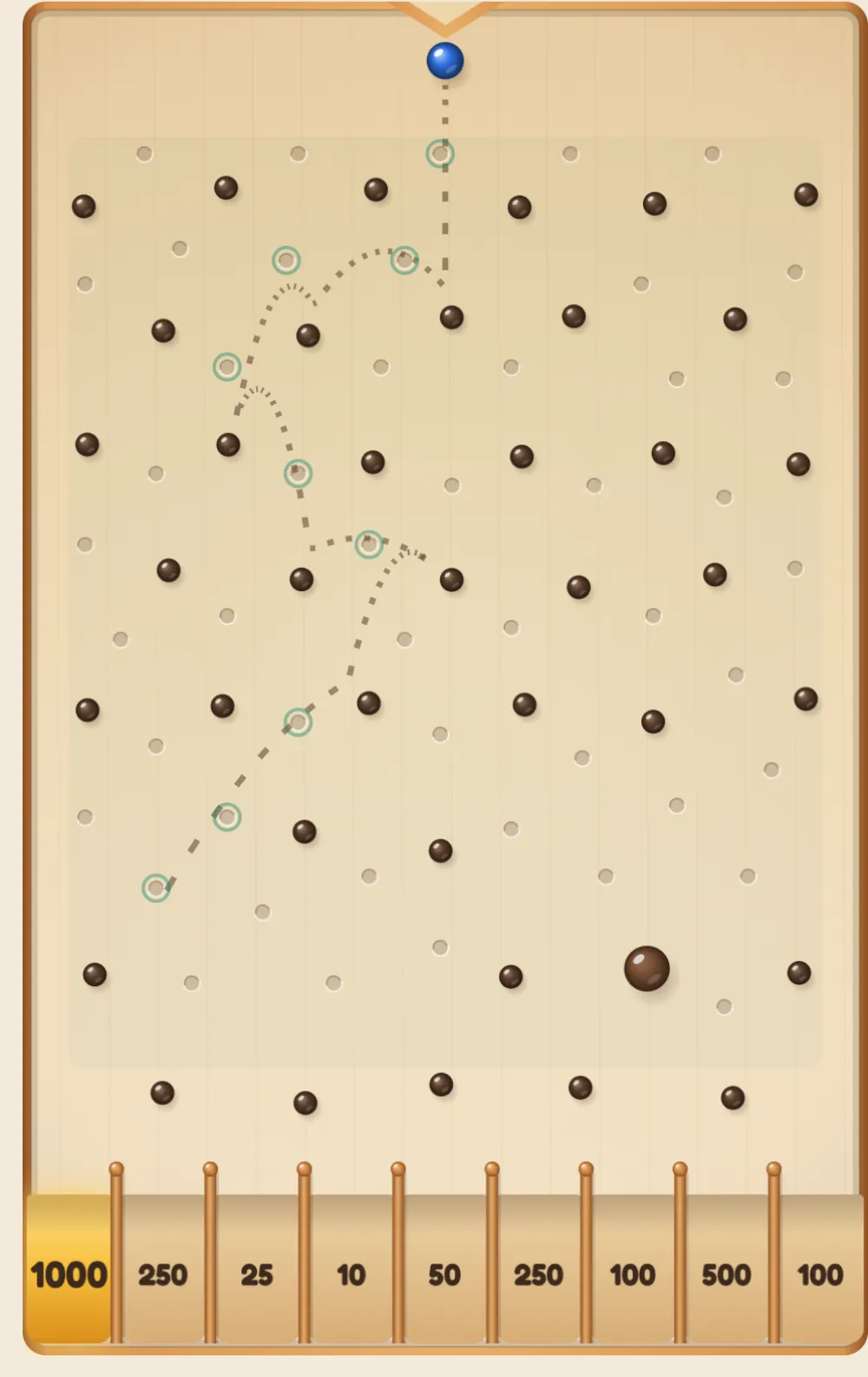
The daily board works differently from the levels. You get three drops, every cup has a points value, and your score is the total of the three. Two rules make it a real puzzle:
- Your pegs stay. The peg from your first drop is still on the board for your second and third, and it can block a route you wanted later.
- Each cup pays once a day. Landing in the 1000 cup twice only pays the first time.
So before you place your first peg, look for two or three good cups you can reach, and ask whether your first peg will get in the way of the others. A first drop that takes 500 points and leaves the 1000 cup open can beat a first drop that takes the 1000 and blocks everything else.
Everyone gets the same board on the same date, which is what makes comparing scores with friends fair. A new board starts at midnight where you are, and playing the daily on days in a row builds your streak.
5. Go after the stars
On a level, three stars hang along the route of an answer, between where the marble meets your peg and the cups. The marble collects any star it passes through, and a win pays the stars it collected, with at least one star for any win.
If you won with one star, the stars themselves are a clue: they show the route the level was built around. Find the peg that sends the marble through all three, and you have found the cleanest answer. Stars unlock new marbles, from Amber at 10 stars to Gold at 400.
6. Learn each new piece with a test drop
Each world brings in a new piece: springs, glass, portals, pebbles, planks, movers, mud, wind and gems. When one first appears, spend a drop just watching what it does, even if you do not expect to win. Knowing that a spring throws the marble hard, or that mud stops it dead, is worth more than one lucky win. The guide to the 20 worlds explains every piece.
7. Playing on a computer
On a computer you can aim with the mouse, or with the keyboard: the arrow keys move the peg and Enter or Space drops the marble. On a wide screen the board sits at full height with the buttons beside it.